


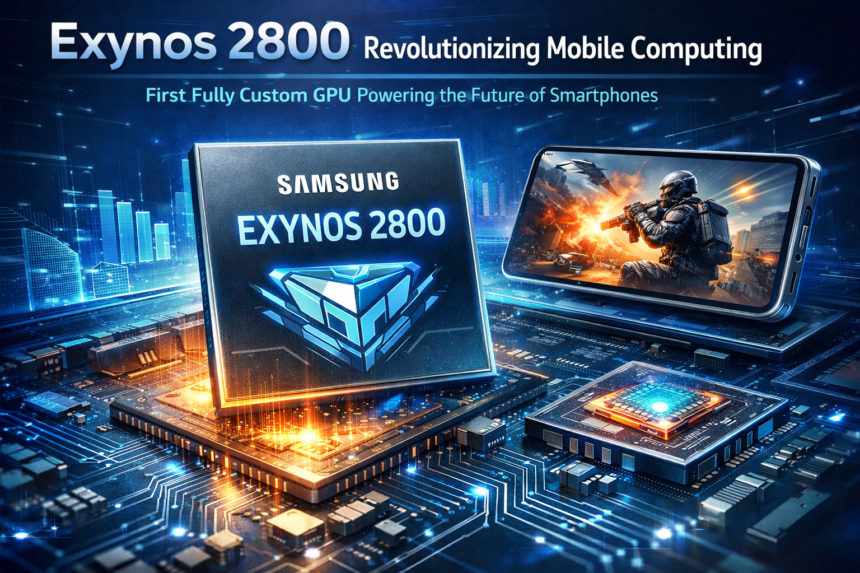
In a significant leap forward for the semiconductor industry, Samsung is set to introduce its first fully custom graphics processing units (GPU) with the Exynos 2800 chipset in 2027. This groundbreaking development marks Samsung’s complete transition from relying on external GPU architectures to designing its own graphics processing technology from the ground up. The upcoming Exynos 2800 represents not just an incremental improvement but a fundamental shift in the Korean giant’s approach to mobile computing and advanced chipsets.
- 1. Complete Vertical Integration: A New Era for Samsung Silicon
- 2. Expanding Beyond Smartphones: A Unified Ecosystem
- 3. Accelerated AI Performance Through Parallel Computing
- 4. Enhanced Gaming Performance with Optimized Architecture
- 5. Improved Power Efficiency Through Custom Design
- 6. Cost Reduction and Competitive Advantage
- 7. Faster Innovation Cycles Through Complete Ownership
- 8. Advanced Manufacturing Process Integration
- 9. Customized Features for Samsung Devices
- 10. Positioning for the Post-Smartphone Era
- The Road Ahead: Challenges and Opportunities
1. Complete Vertical Integration: A New Era for Samsung Silicon
Samsung’s journey toward GPU independence has been years in the making. While the recently announced Exynos 2600 features the Xclipse 960 GPU—a semi-custom solution that uses Samsung’s design with AMD’s RDNA architecture—the Exynos 2800 will take this evolution to its logical conclusion. By developing both the design and proprietary GPU architecture in-house, Samsung joins an elite club of tech giants like Apple and Qualcomm that maintain complete control over their graphics technology.
This vertical integration complements Samsung System LSI’s existing expertise in displays, memory, and image sensors, creating a fully optimized ecosystem where each component is designed to work seamlessly with the others. The result? Unprecedented efficiency and performance tailored specifically for Samsung devices, enhancing the overall Galaxy experience.
2. Expanding Beyond Smartphones: A Unified Ecosystem
The Exynos 2800’s custom graphics processor isn’t just about powering flagship phones. Samsung has ambitious plans to deploy this technology across multiple computing categories, creating a unified ecosystem of devices that share the same graphics architecture.
From smart glasses and autonomous vehicle software to advanced robotics and humanoid robots, Samsung’s custom GPU will enable consistent performance and feature sets across diverse product lines. This cross-category compatibility will allow developers to create applications that work seamlessly across the entire Samsung ecosystem, similar to Apple’s approach with its custom silicon.
3. Accelerated AI Performance Through Parallel Computing
Samsung’s proprietary GPU architecture is being designed with parallel computing capabilities that will significantly boost on-device AI processing. By tailoring the GPU specifically for AI workloads, the Exynos 2800 will accelerate Galaxy AI features like image enhancement, video effects, and real-time language processing directly on the device, potentially outperforming traditional AI processors.
This focus on AI acceleration comes at a crucial time when smartphone manufacturers are increasingly differentiating their products based on AI capabilities. Samsung’s custom AI chips could provide the computational foundation needed to deliver more sophisticated AI features while maintaining privacy and reducing cloud dependence, positioning Samsung as an AI-driven company in the mobile space.
4. Enhanced Gaming Performance with Optimized Architecture
Gaming performance has always been a critical benchmark for mobile graphics. With complete control over its graphics architecture, Samsung can optimize the Exynos 2800’s GPU specifically for mobile gaming scenarios, potentially delivering better frame rates and visual quality than generic GPU designs.
The custom architecture will likely incorporate advanced features like hardware-accelerated ray tracing, variable rate shading, and mesh shaders—technologies that are becoming increasingly important for mobile gaming as developers push the boundaries of what’s possible on portable devices. This could give Samsung’s flagship models a significant edge in the competitive mobile gaming market.
5. Improved Power Efficiency Through Custom Design
One of the most significant advantages of developing a custom GPU is the ability to optimize for power efficiency. By designing the graphics architecture specifically for mobile form factors, Samsung can balance performance and battery life more effectively than with licensed GPU designs, improving both thermal efficiency and the overall thermal envelope of the device.
This improved efficiency will be particularly important as smartphone displays continue to advance with higher refresh rates and resolutions, which place increasing demands on the GPU. Samsung’s custom solution can be precisely tuned to deliver optimal performance for its own display technologies while minimizing power consumption, a crucial factor for flagship phones.
6. Cost Reduction and Competitive Advantage
Developing an in-house GPU eliminates the need to pay licensing fees to external companies like AMD. While the initial investment in R&D is substantial—evidenced by Samsung’s aggressive hiring of GPU engineers with lucrative annual salaries ranging from $203,000 to $690,000—the long-term financial benefits could be significant.
These cost savings could either improve Samsung’s profit margins or be passed on to consumers in the form of more competitive pricing, giving Samsung an edge in the highly competitive global markets for smartphones and other devices.
7. Faster Innovation Cycles Through Complete Ownership
With full control over its GPU architecture, Samsung can iterate and innovate more rapidly than when dependent on external partners. This agility will be crucial in the fast-moving mobile market, where new use cases and technologies emerge constantly.
Rather than waiting for a partner to develop new GPU features, Samsung can implement innovations on its own timeline, potentially bringing new capabilities to market faster than competitors who rely on third-party GPU designs or Snapdragon chipsets.
8. Advanced Manufacturing Process Integration
The Exynos 2800 is expected to utilize Samsung’s advanced semiconductor manufacturing processes, possibly its second-generation 2nm GAA (Gate-All-Around) technology or even a third-generation 2nm process. By designing both the GPU architecture and the manufacturing process in-house, Samsung can achieve tighter integration between hardware design and fabrication.
This synergy between chip design and manufacturing could result in better yields, higher performance, and improved efficiency compared to competitors who must design their chips for third-party foundries. It also positions Samsung to better compete with domestic rivals and international players in the system semiconductors market.
9. Customized Features for Samsung Devices
A fully custom GPU allows Samsung to implement unique features specifically designed for its Galaxy devices. These could include specialized hardware acceleration for Samsung’s camera processing algorithms, display technologies, or security features.
This level of customization could help Samsung’s flagship models stand out in an increasingly homogenized smartphone market, where many competitors use the same off-the-shelf components. The ability to create device-specific GPUs tailored to each product’s needs could significantly enhance the overall Galaxy experience.
10. Positioning for the Post-Smartphone Era
Perhaps most importantly, Samsung’s investment in custom GPU technology positions the company for the post-smartphone era. As computing increasingly shifts to wearables, AR/VR devices, and ambient computing platforms, graphics processing will remain a critical component.
By developing expertise in custom GPU design now, Samsung is preparing for a future where computing extends beyond traditional form factors. The company’s experience with the Exynos 2800 will inform its approach to graphics processing across emerging device categories, potentially giving Samsung a head start as the industry evolves, including in areas like the tablet market and beyond.
The Road Ahead: Challenges and Opportunities
Developing a custom GPU architecture is no small feat, which is why only a handful of companies have successfully done so. Samsung faces significant technical challenges in creating a competitive GPU from scratch, particularly in areas like driver development, compiler optimization, and support for industry-standard APIs.
However, the potential rewards are substantial. If successful, the Exynos 2800’s custom GPU could fundamentally change Samsung’s position in the semiconductor industry, transforming the company from a component supplier into a full-stack technology provider with end-to-end control over its products.
The Galaxy S28 series, expected to launch with the Exynos 2800 in 2027, will be the first real-world test of Samsung’s custom GPU technology. Until then, the industry will be watching closely as Samsung takes this bold step toward complete silicon independence, potentially rivaling the achievements of tech giants like Apple, Amazon, and Meta in developing custom AI chips and advanced mobile graphics solutions.